

'/%3E%3C/svg%3E)
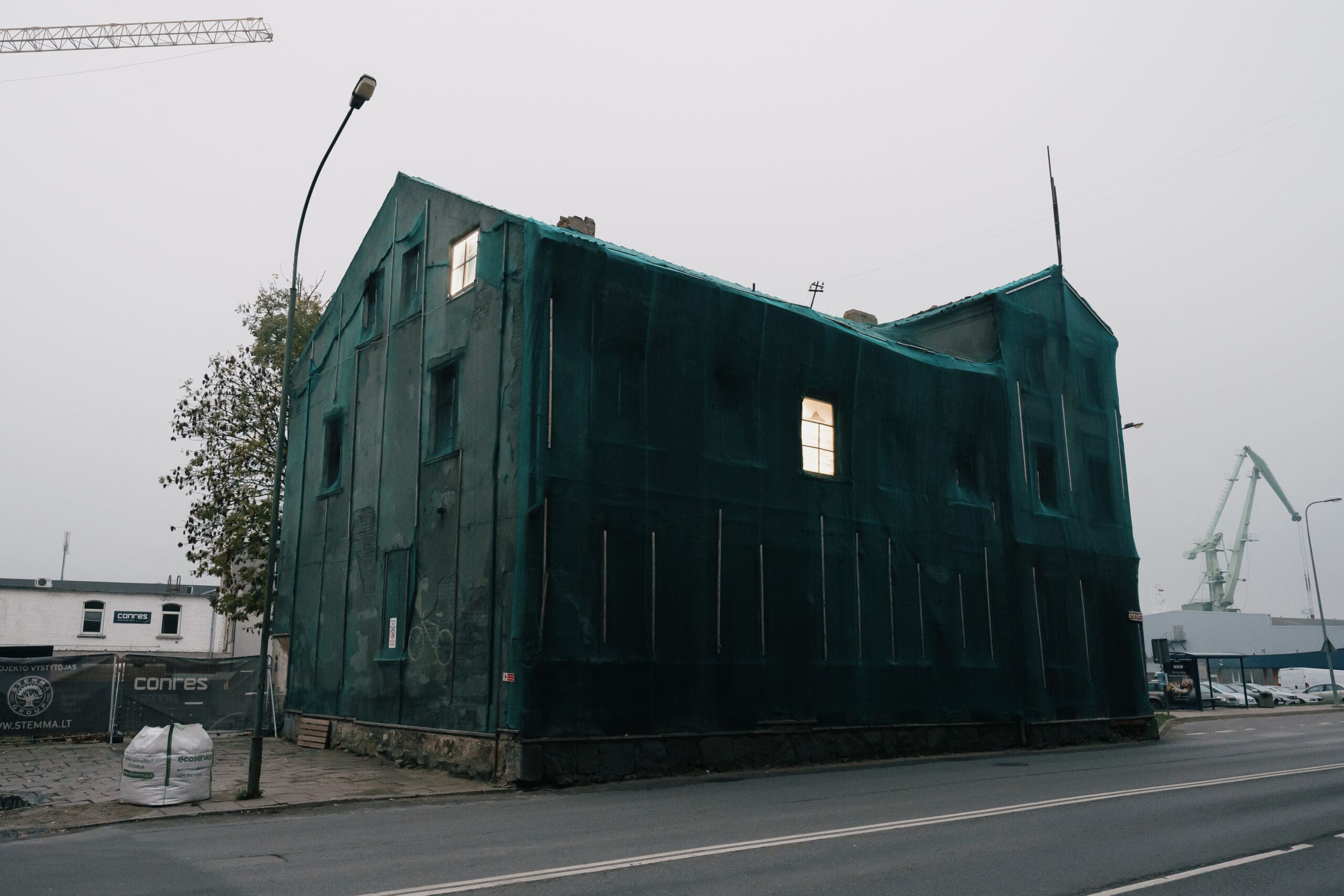
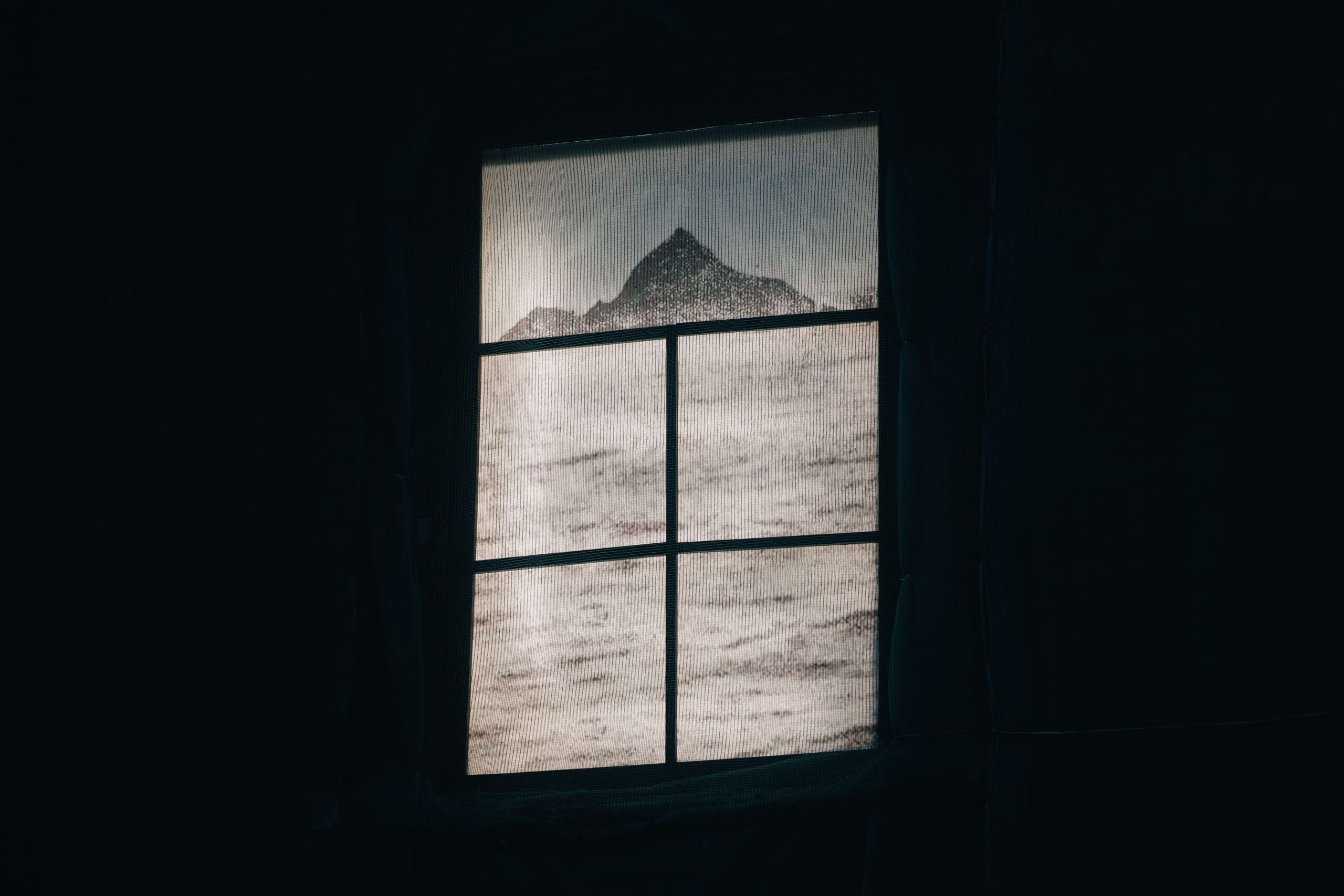
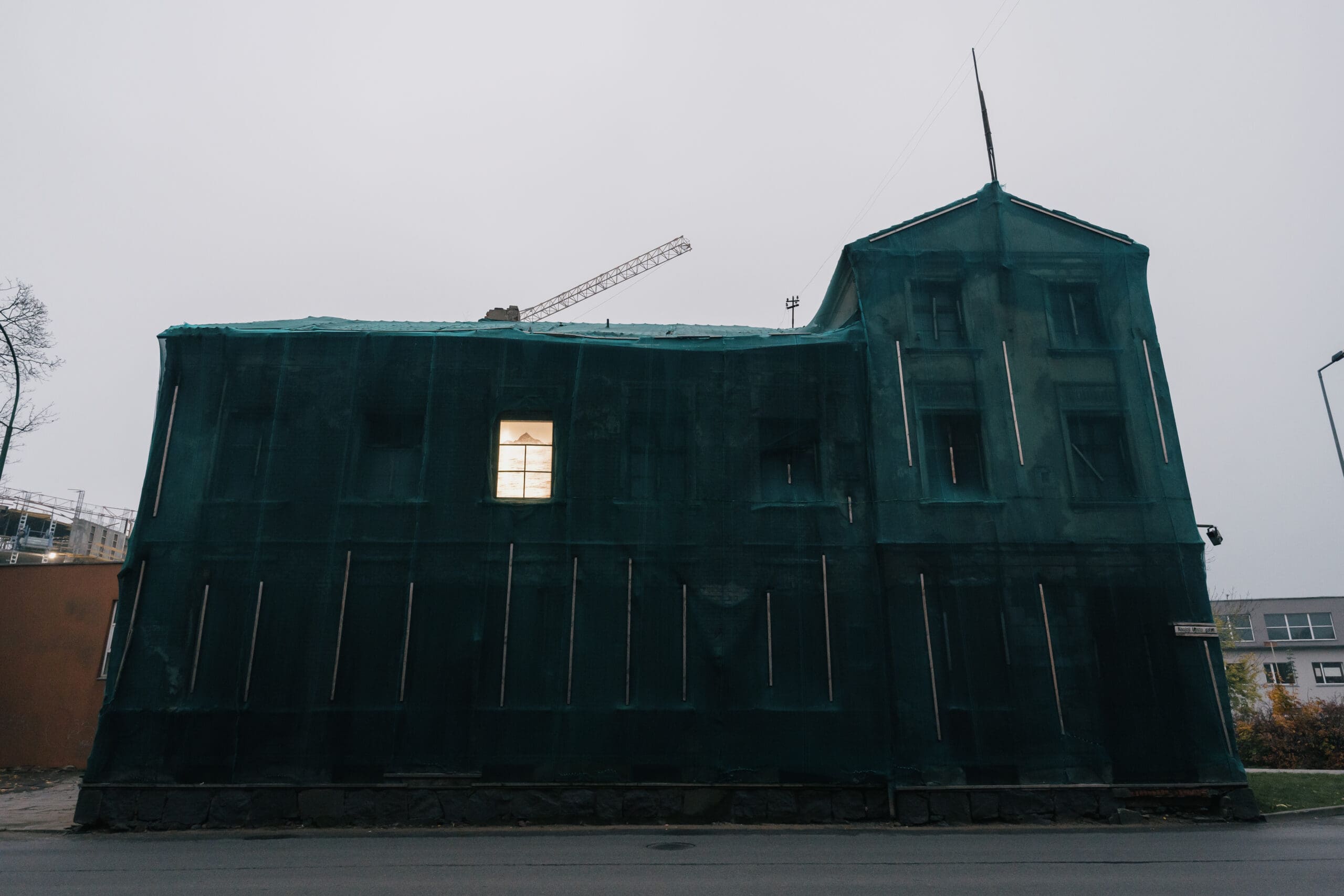
Iceberg, 2024
site-specific installation; light, programming
sound work: Anton Lukoszevieze
M-9 Naujoji Uosto g. 5
The first Lithuanian sea captain, Liudvikas Stulpinas, worked in this house from 1923. In 1912, while steering the ship Birma across the Atlantic, Captain Stulpinas heard the distress call of the sinking Titanic, ordered an immediate change of course and rushed to rescue the Titanic’s passengers; hundreds of loaves of bread were baked and hundreds of beds prepared for them on board. Unable to find the Titanic because of the erroneous coordinates he had been given, Stulpinas contacted the Carpathia, another ship nearby, but received only the reply “shut up”. Because of such failures to communicate, the Birma did not manage to save a single person; it only photographed the iceberg that destroyed the Titanic. The abandoned, crumbling “captain’s house”, left standing right at the edge of a busy street, today looks like a bleak, solitary iceberg itself. Mikučionytė’s light installation in two windows of this house – the Birma’s exchanges with the Titanic and the Carpathia transmitted in Morse code – is like a call for help. But one is broadcast to the east and the other to the west. They do not reach each other. On the northern side of the building, which cannot be approached because of the busy street, a barely discernible iceberg glows, while through the boarded-up door comes music that the composer Anton Lukoszevieze has played from its image as if from a score.
Paulina Pukytė
Anton Lukoszevieze is an interdisciplinary artist, composer and musician. In his practice Anton uses experimental sound, performance, photography, video, experimental printmaking, drawing, collage and found objects. He has collaborated with a wide range of artists and organisations, such as Christian Marclay, Beatrice Gibson, Jayne Parker, Lina Lapelytė, Philip Corner, Jim O’Rourke, Phill Niblock, Tony Conrad, Milan Knížák, Arturas Bumšteinas, the Merce Cunningham Dance Company, Tate Modern, the Whitechapel Gallery, the Serpentine Gallery and Copenhagen Contemporary. He is the founder and director of the experimental music group Apartment House.
Indigo, 2024
interactive site-specific installation
M-10 Žvejų g. 12 / Karlskronos a.
The story goes that during the Klaipėda fire of 1854 the goods warehouse of the businessman Heinrich Schliemann, “the discoverer of Troy”, which stood near this spot, “miraculously” did not burn down. Another version has it that Schliemann’s goods survived the fire only because their delivery had been delayed. Those saved goods were indigo, the natural blue dye that we see all around us today – in the form of jeans. Jeans – during the Soviet years such a coveted and hard-to-get fashion item and a symbol of status and freedom – most often reached Lithuania through Klaipėda, brought in “illegally” by sailors from ships that had sailed to Western countries. In the West, blue jeans (until then workers’ clothing), before becoming simply a universally worn garment, were a symbol of rebellious youth, of freedom and of the struggle for gender, racial and social equality, as well as an attribute of political protests against war and violence towards women. Because they are so widespread, they have become a sign of mass protest in our own century too, especially where any symbol of revolt against authoritarian and repressive regimes is banned. Here, on the site of H. Schliemann’s former indigo warehouse, photograph as many pairs of jeans as you can and upload them to www.reiskinys-m-indigo.weebly.com
Paulina Pukytė
Two Maps: An Archaeology of History, 2024
site-specific installation
M-13 Sinagogų g. 13 / Žiedų skg. 3
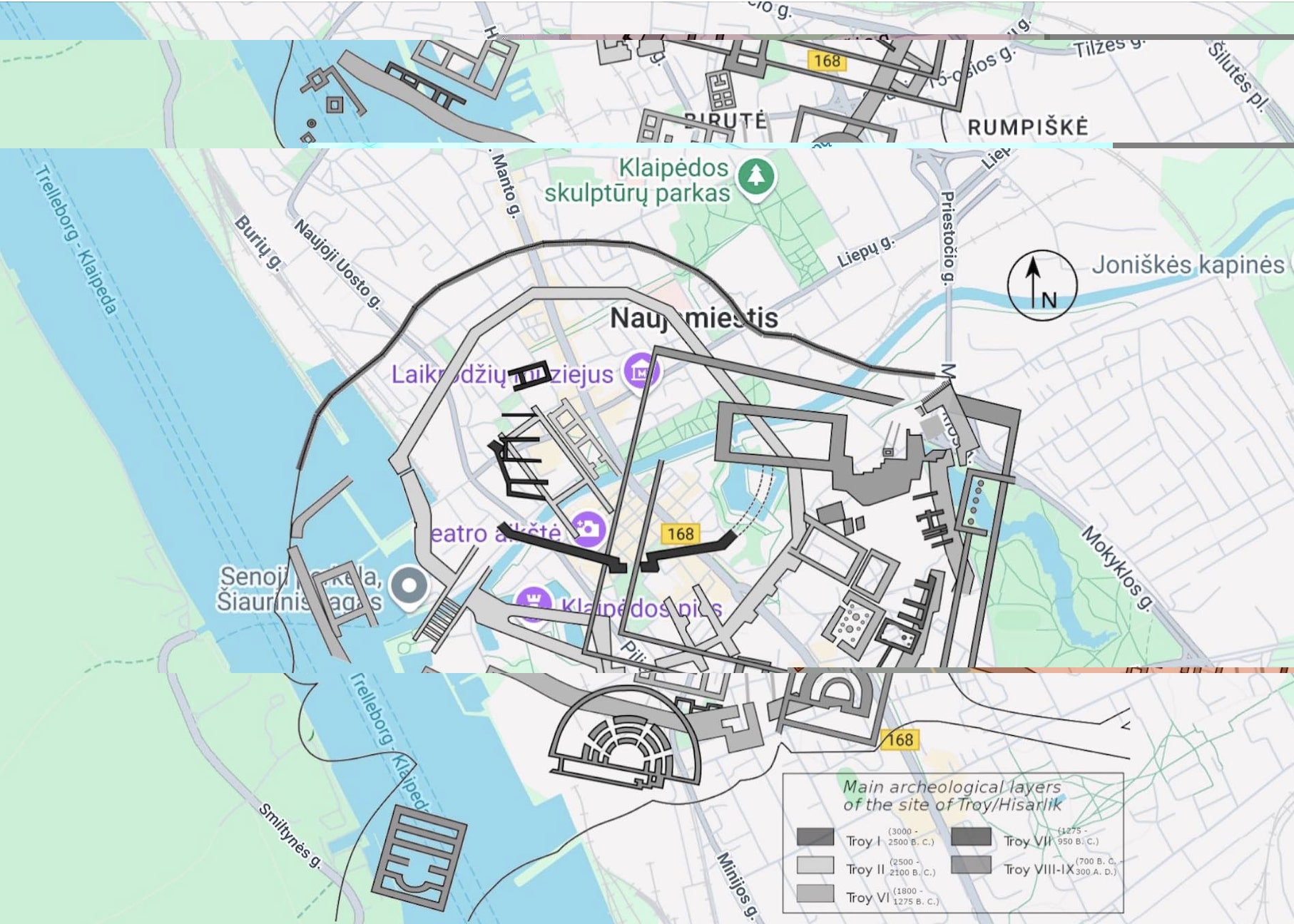
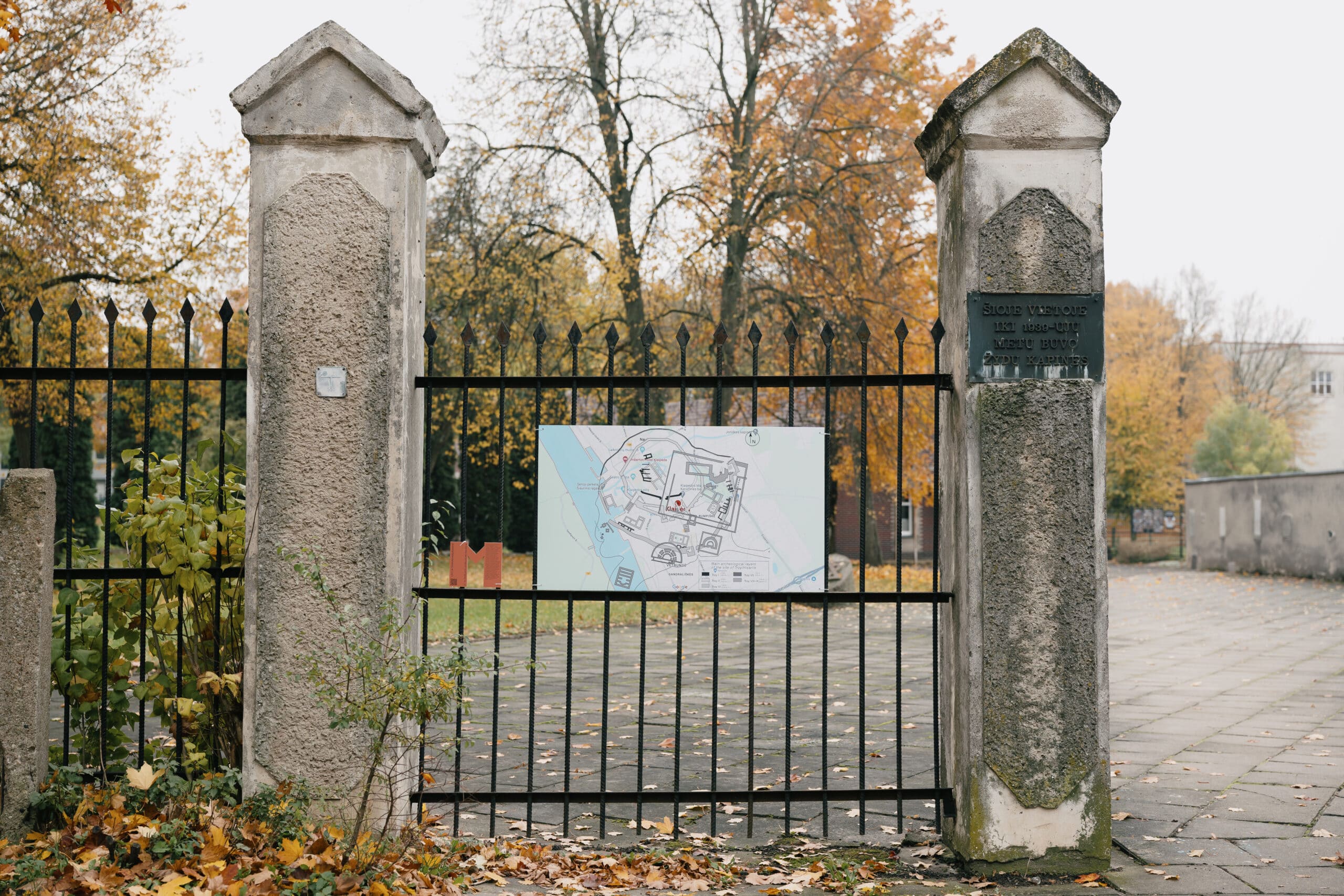
The celebrated 19th-century amateur archaeologist, populariser of archaeology and one of the discoverers of the legendary city of Troy, Heinrich Schliemann, is connected with Klaipėda too – he had trading interests here. Investigating the layers of Klaipėda’s cultural history by artistic means, Liucija Teodora Mikučionytė laid the map of the archaeological excavations of Troy compiled by the Troy Project
over a present-day Google map of the city of Klaipėda (matching the geographical centre of Klaipėda with the geometrical centre of the archaeological map of Troy), thus comparing the real Klaipėda with the mythical Troy – and discovered a number of coincidences. One of the oldest structures excavated at the presumed site of Troy is a city gate built some 5,000 years ago. At the corresponding place on the map of Klaipėda there is also a gate, behind which a structure (about 50 years old) was likewise unearthed quite recently – the foundations of the towers that jammed Western radio stations. The towers were erected during the Soviet period on the grounds of Klaipėda’s old Jewish cemetery, their foundations poured over human bones, the concrete mixed with smashed Jewish gravestones. This shameful and chilling “archaeological” find can now be seen behind the gate of that cemetery, beside the Klaipėda Centre of Jewish Culture and Religion.
Paulina Pukytė
Liucija Mikučionytė received her master’s degree in photography and media art from the Vilnius Academy of Arts this year and works with modern photography archives at the Iconography Department of the National Museum of Lithuania. In her artistic practice, using a layering method of her own devising, Liucija explores the historical and cultural strata of specific spaces, combining various media – photography, video, performance and installation.